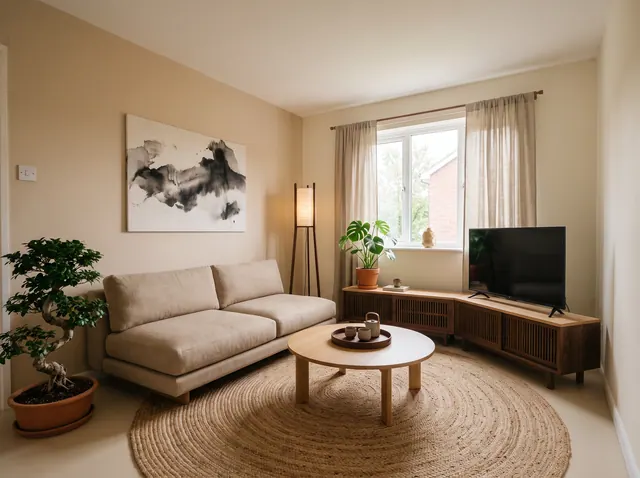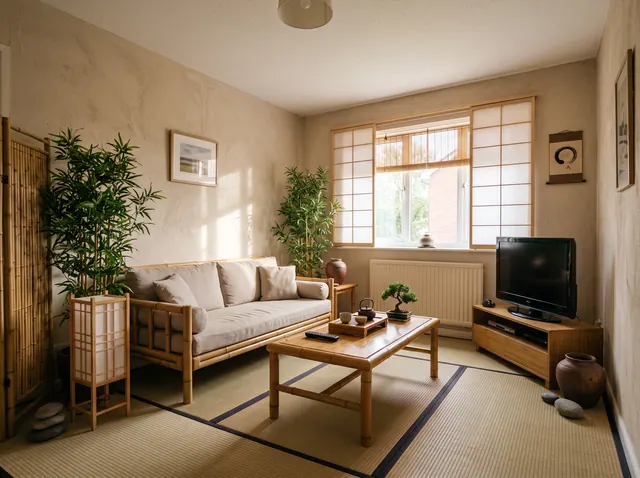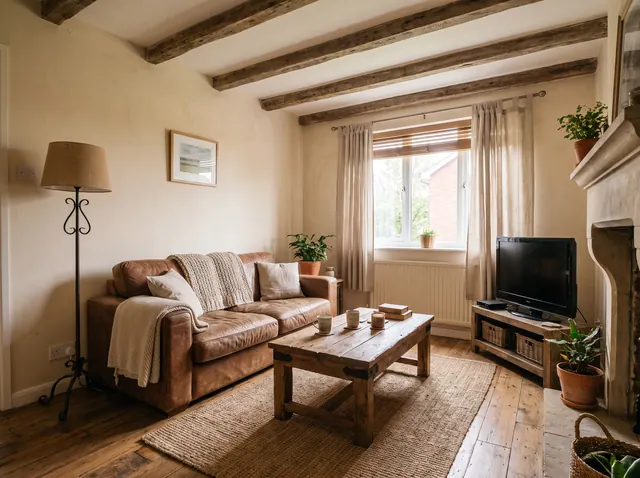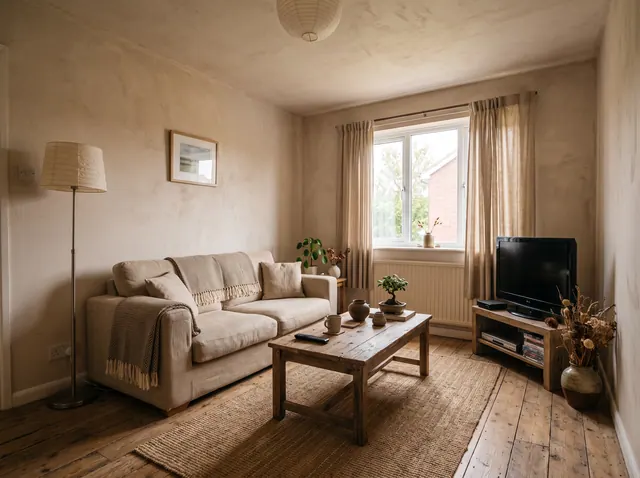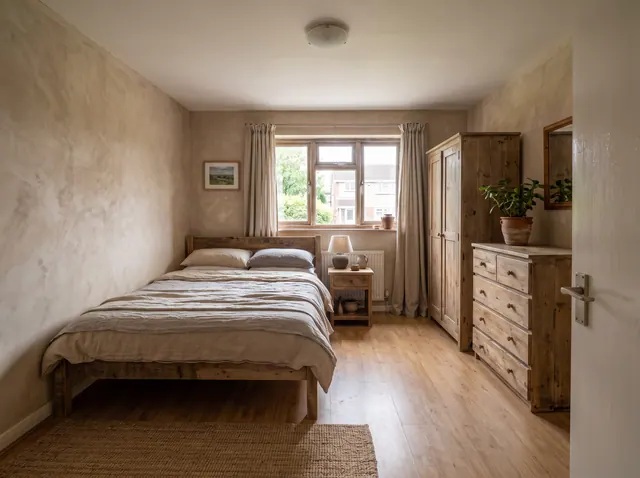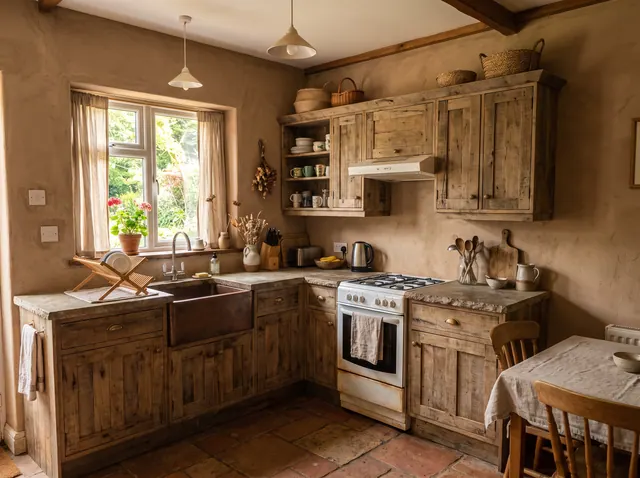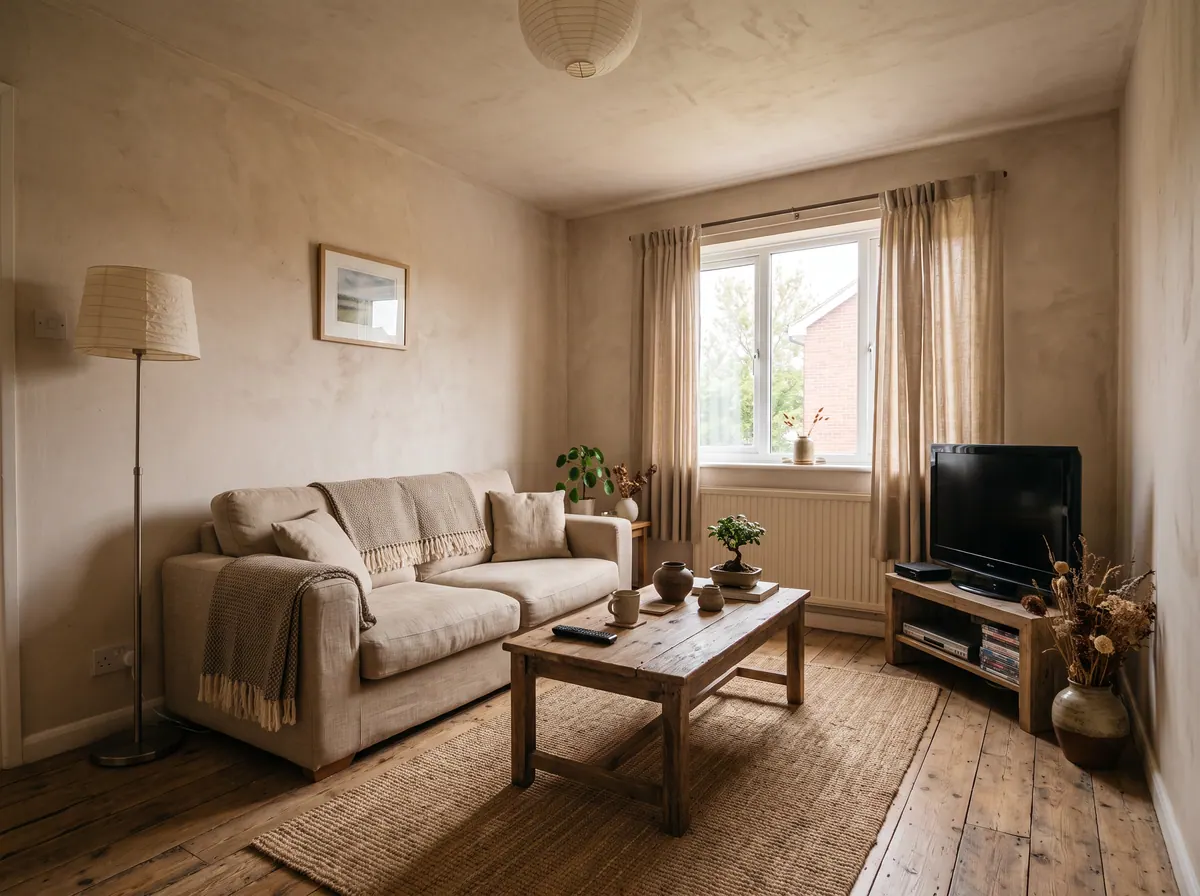
A Wabi-Sabi living room
- Limewash the walls in a warm, earthy tone.
- Choose a low sofa in washed linen and a rough wooden coffee table.
- Display one or two handmade pieces and a dried branch.
Style guideThe beauty of imperfect, natural things
Wabi-sabi is a Japanese way of seeing beauty in simple, imperfect and aging things. In a room it means natural materials, earthy colors, handmade objects and nothing too polished.
Your first design is free. No credit card needed.
Updated October 11, 2026
Wabi-sabi grew out of Zen Buddhism and the Japanese tea ceremony, where simple, rustic tea bowls came to be valued above perfect ones. Wabi is about quiet simplicity, sabi about the beauty that comes with age.
At home it means choosing things that look made by hand and get better with use: limewashed walls, worn wood, rough linen, stone and clay.
Rooms are calm and uncluttered, with space for a few objects that mean something to you.
Bone
#EDE6DA
Walls and linen
Mushroom
#B5A795
Plaster and textiles
Clay
#A67C5B
Ceramics and wood
Stone gray
#8C8A84
Stone and concrete
Charcoal
#3B3A37
Iron and dark accents
Stay with soft, earthy, slightly faded tones. Texture matters more than color: limewash, plaster and natural wood give walls and floors their depth.
Limewashed or plastered walls, wood with knots and cracks, uneven handmade tiles.
Hand-thrown bowls, carved wooden spoons and woven baskets.
Benches, low tables and plain chairs with visible joints.
Few objects, carefully placed. The space around them matters as much as the objects.
Linen curtains and paper lamps diffuse the light.
A dried branch, a smooth stone, seasonal stems in a clay vase.
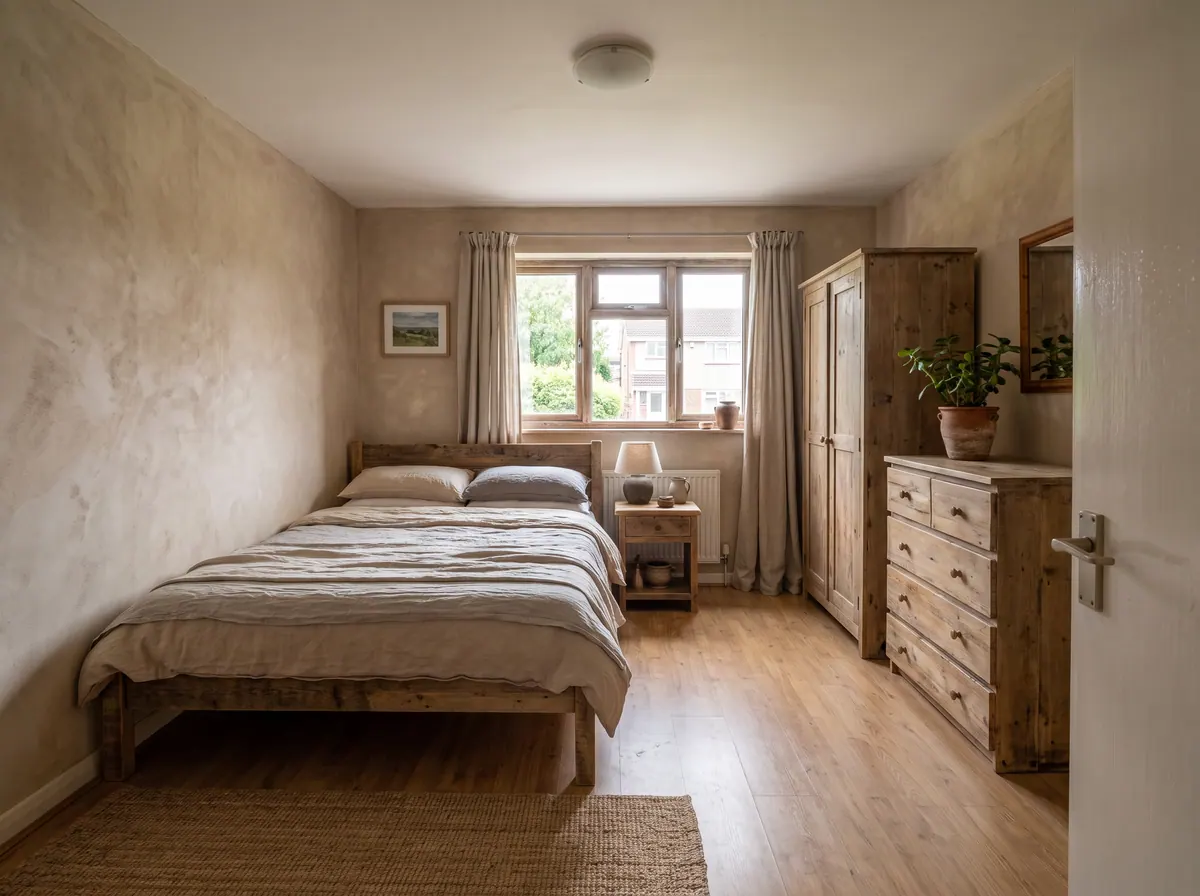
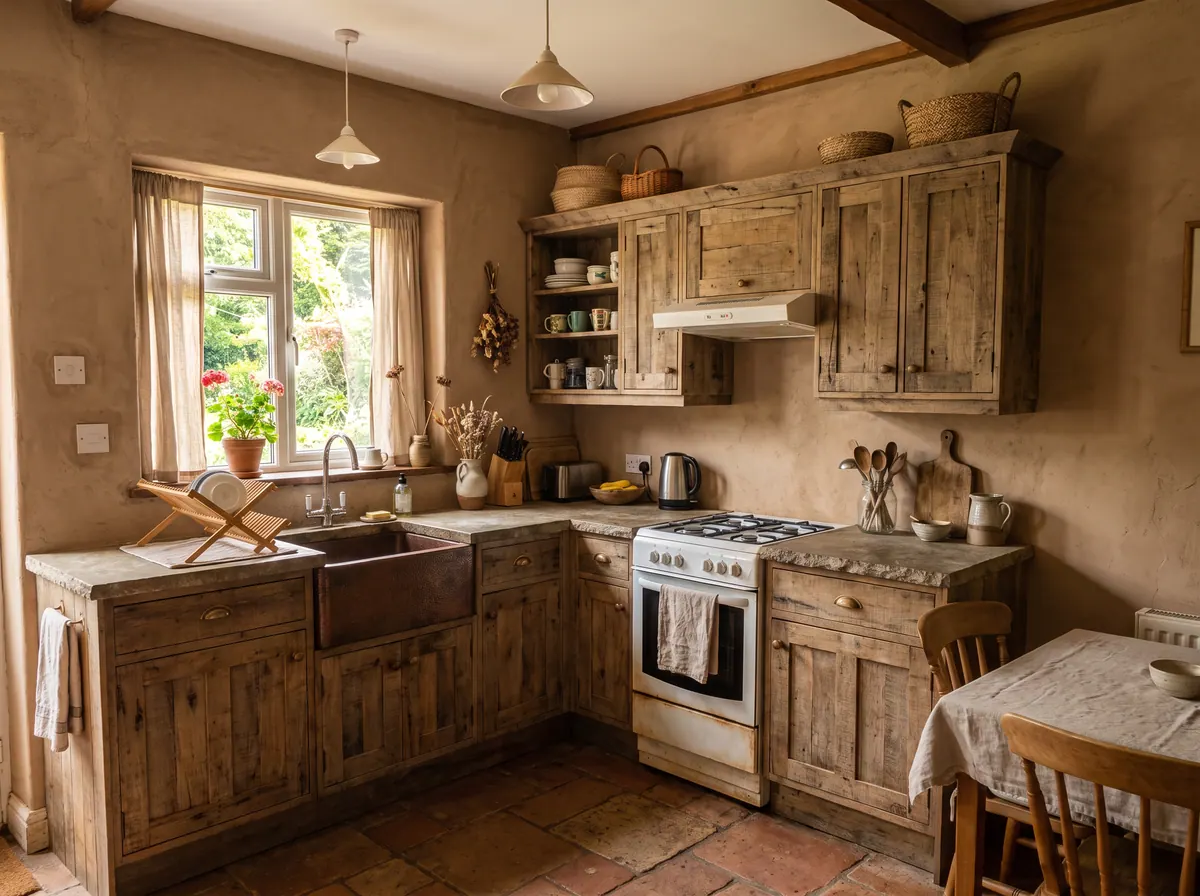
Japandi is cleaner and more refined, mixing Japanese calm with Scandinavian comfort. Wabi-sabi is rawer and more organic, embracing wear, cracks and rough textures.
Read the Japandi guideRustic is warm and cozy, often with heavy wood and cabin touches. Wabi-sabi is quieter and sparer, with a lighter, more meditative feel.
Read the Rustic guideIt is a Japanese idea that finds beauty in things that are imperfect, impermanent and incomplete, like a cracked bowl or weathered wood.
Muted, earthy tones: bone, oatmeal, mushroom, clay, stone gray and charcoal, the colors of natural materials.
No. They share calm and natural materials, but wabi-sabi is rawer and more rustic, while Japandi is cleaner and adds Scandinavian comfort.
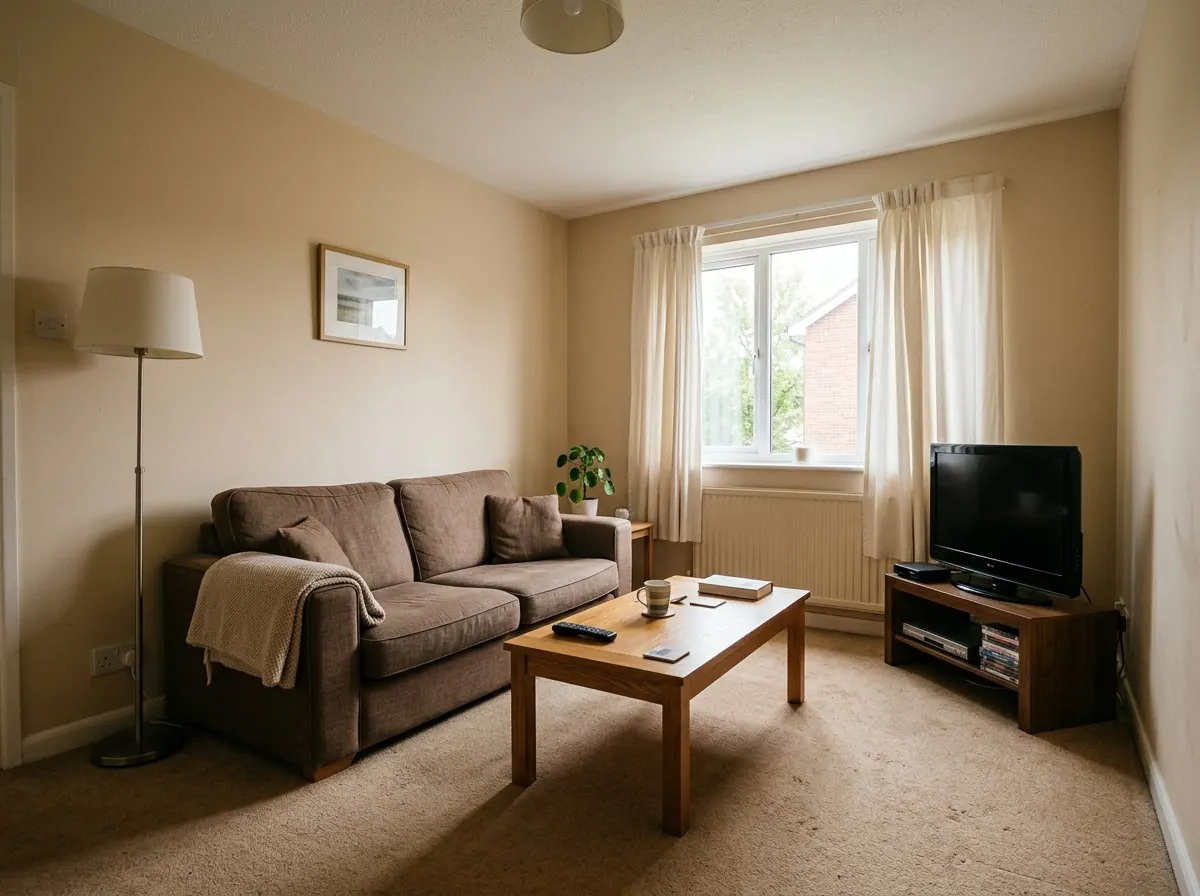
Yes. Upload a photo to the AI Interior Designer and pick Wabi-Sabi. It keeps your walls and layout and restyles the room with natural, earthy materials.
Upload a photo and get your first design free. No credit card needed.