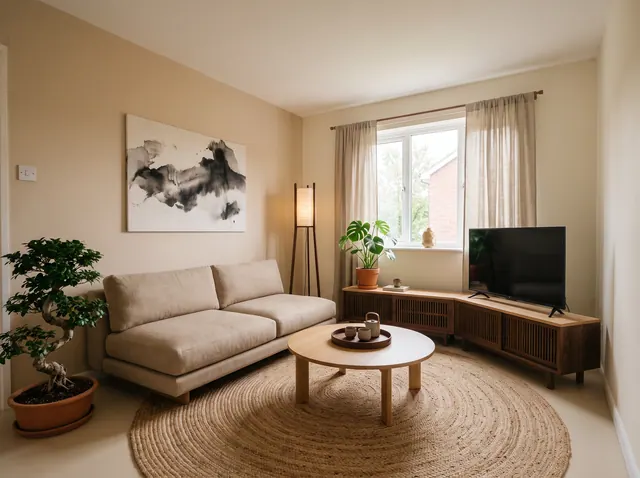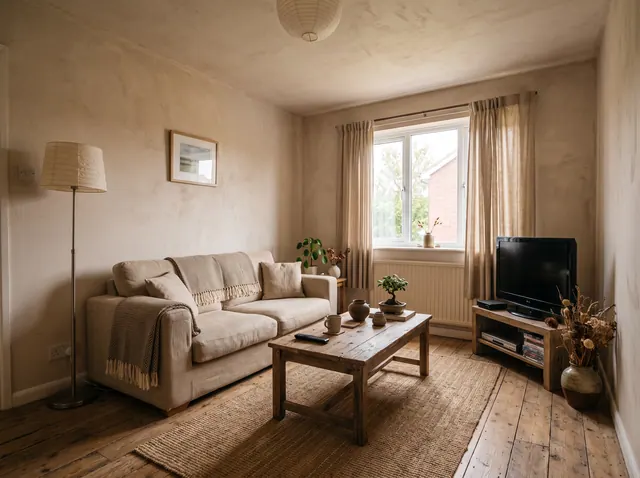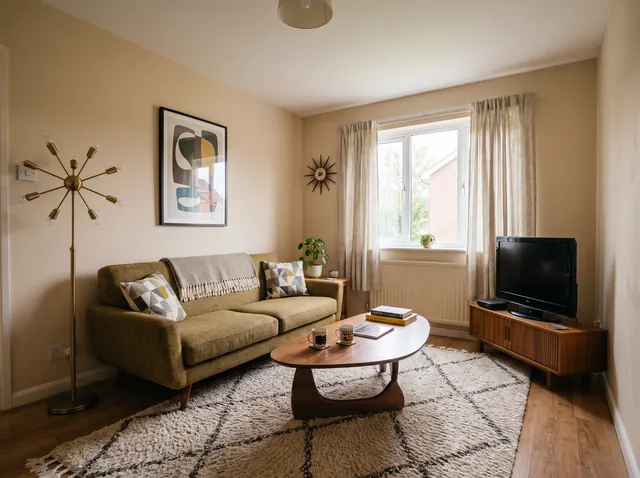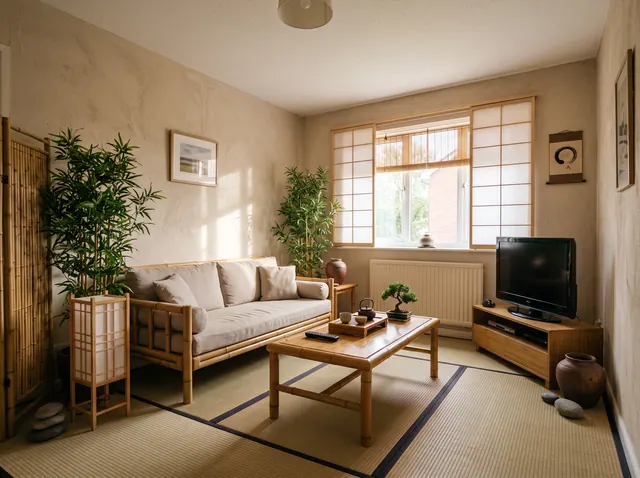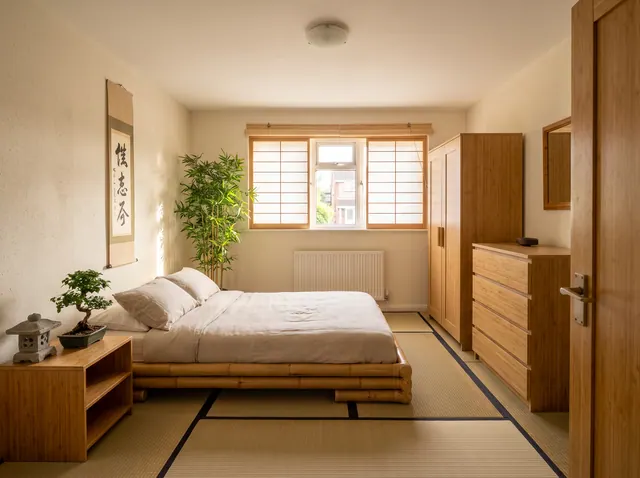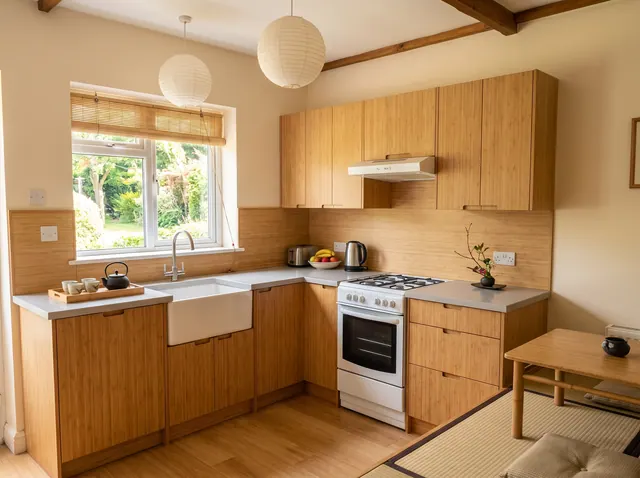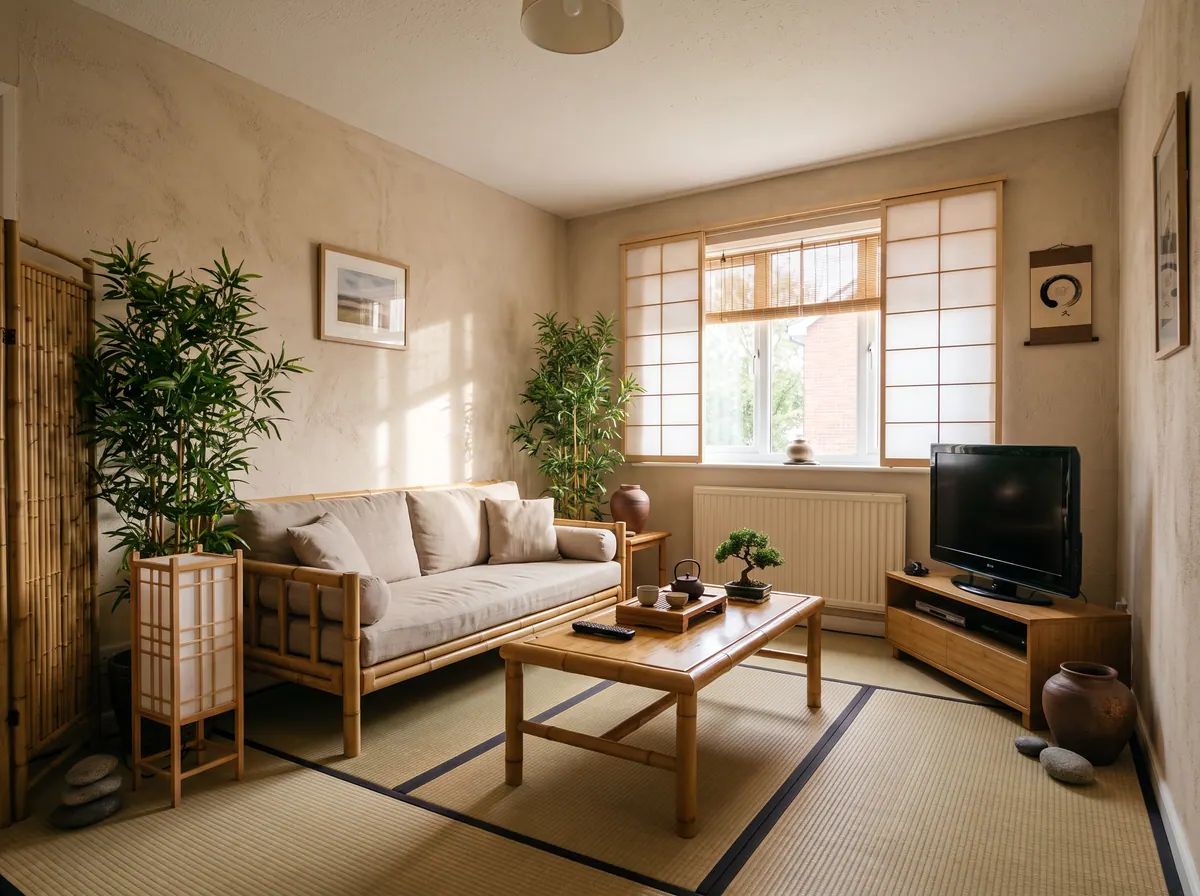
A Japanese living room
- Choose a low sofa or floor seating around a low wooden table.
- Use shoji-style screens or paper lamps to soften the light.
- Keep one focal point: a plant, a scroll or a garden view.
Style guideCalm, simple and close to nature
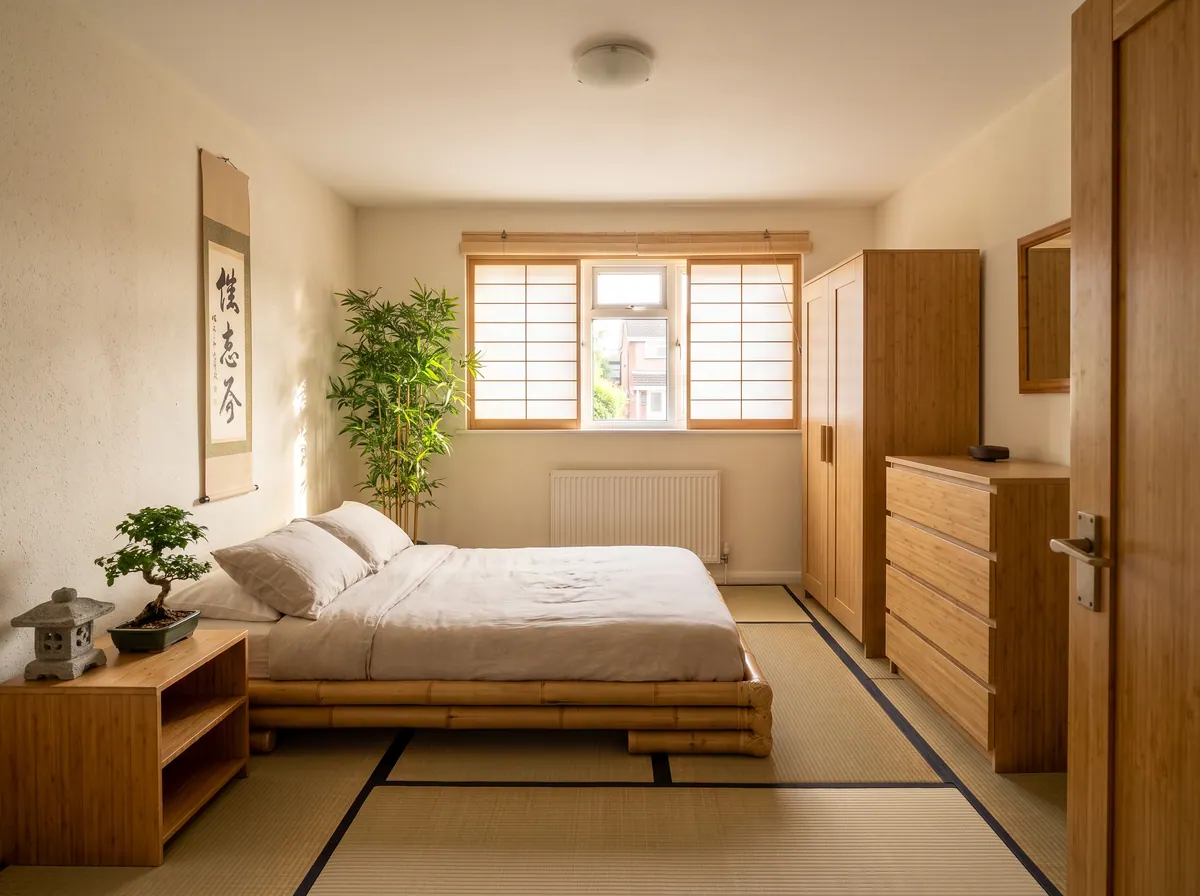
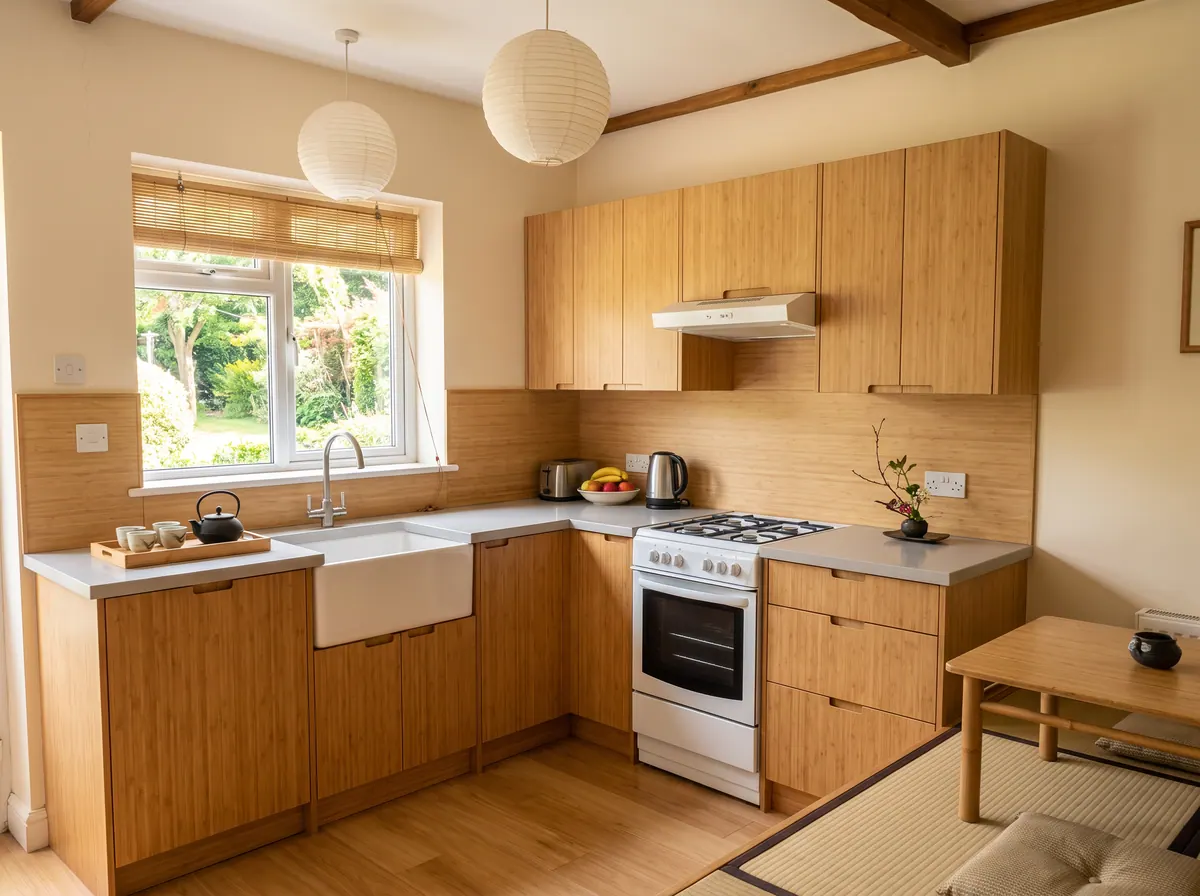
Japanese interior design is calm, simple and close to nature: natural wood, paper shoji screens, tatami mats, low furniture and very few objects, with a garden view or a single plant as the focus.
Your first design is free. No credit card needed.
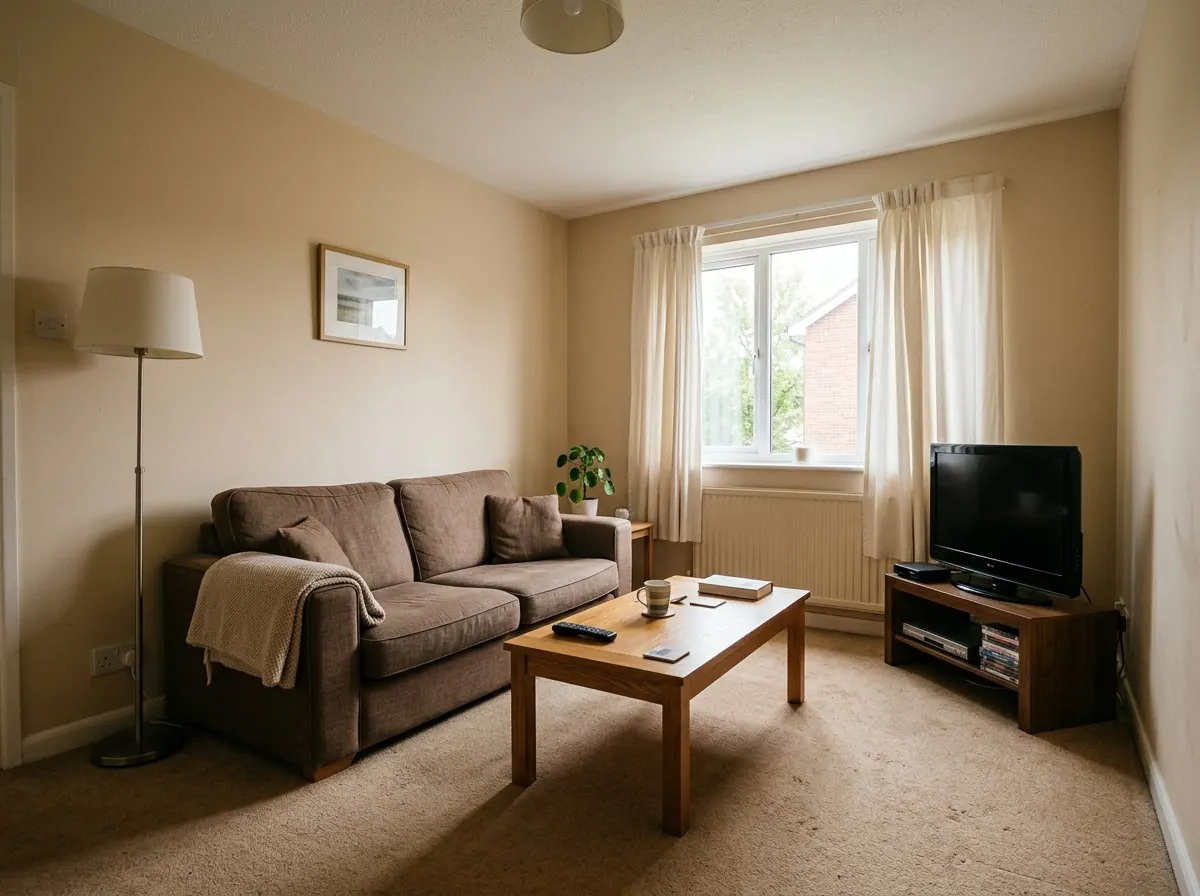
Updated October 11, 2026
Traditional Japanese homes grew from ideas of simplicity and harmony with nature, shaped by Zen Buddhism. Rooms were flexible: sliding screens opened spaces up, and futons were folded away during the day.
A Japanese-style room today keeps that calm: natural materials, soft light, low lines and a sense of space.
Many people add one or two traditional touches, like shoji-style screens or a tokonoma alcove, to an otherwise modern home.
Rice paper
#F4EFE3
Walls and screens
Tatami
#CDBF92
Floors and mats
Hinoki wood
#D7B98E
Furniture and frames
Ink black
#2B2A28
Frames and contrast
Moss
#6B7650
Plants and garden views
Most of the room stays in the light, natural colors of wood, paper and straw. Black adds definition, and green brings the garden in.
Sliding wooden frames with paper panels soften the light and divide space.
Woven rush floor mats, so central that Japanese rooms are measured in them.
Floor cushions, low tables and futons or low platform beds.
A small alcove for one scroll, flower arrangement or object.
A garden view, a small courtyard or simply a plant or bonsai.
Built-in cupboards keep everything out of sight.
Japandi blends Japanese calm with Scandinavian comfort: higher sofas, soft textiles and more warmth. Japanese design is lower, sparer and more traditional.
Read the Japandi guideWabi-sabi is a Japanese way of seeing beauty in imperfection and age. Japanese interiors often follow it, but they can also be crisp and refined.
Read the Wabi-Sabi guideNatural wood, shoji screens, tatami mats, low furniture, hidden storage, soft natural light and a connection to nature.
A calm, low bedroom: a futon or a low platform bed, plain natural bedding, paper or wooden screens, soft light and almost nothing else.
Yes. Start with low furniture, natural wood, paper lamps and fewer things. Add shoji-style screens or a tatami area if you want to go further.
Yes. Upload a photo to the AI Interior Designer and pick Japanese Zen. It keeps your walls and layout and restyles the room with natural materials and calm, low furniture.
Upload a photo and get your first design free. No credit card needed.