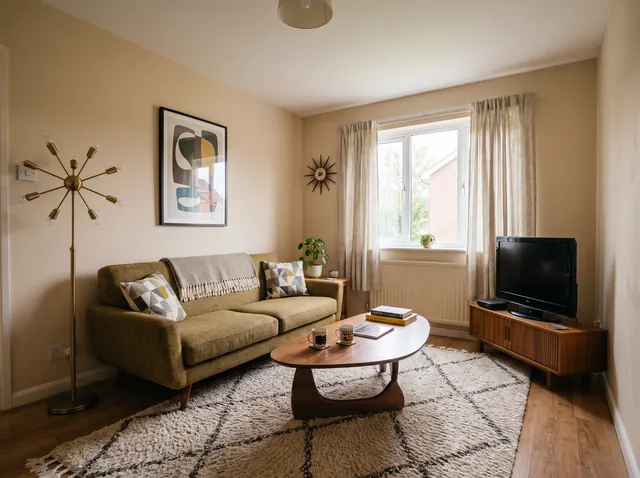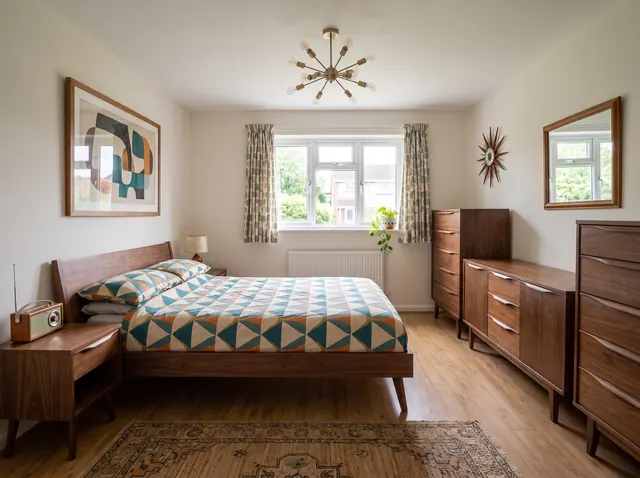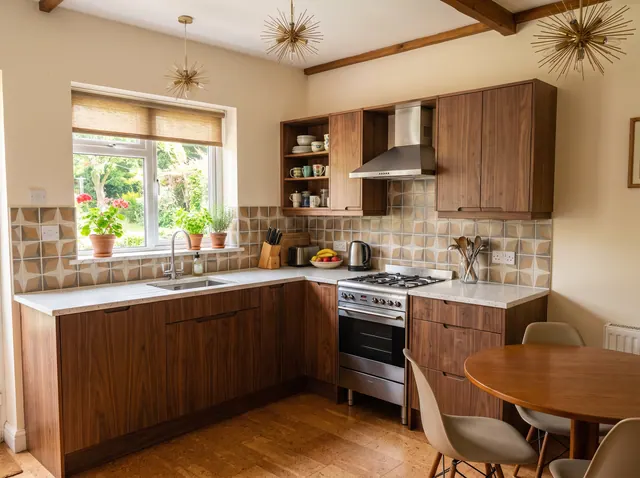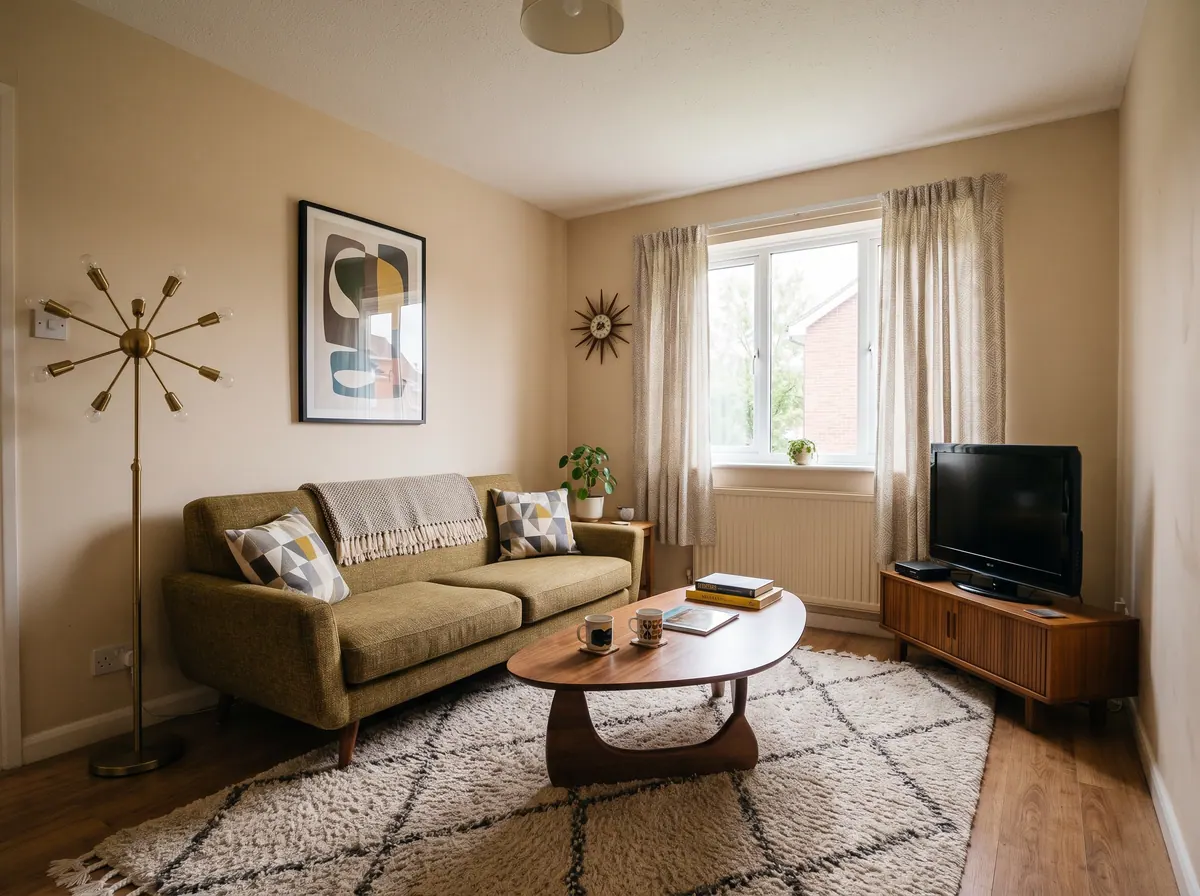
A Mid-Century Modern living room
- Start with a low sofa on wooden legs in tweed or a bold color.
- Add a walnut sideboard along one wall.
- Finish with an arc lamp and a geometric rug.
Style guideWarm wood, clean lines and 1950s optimism
Mid-century modern is the style of the 1940s to the 1960s: warm wood, simple shapes, slim tapered legs and pops of color like mustard, teal and orange. It looks clean and modern but never cold.
Your first design is free. No credit card needed.
Updated October 11, 2026
After the Second World War, designers used new materials and factory methods to make modern furniture for ordinary homes. Charles and Ray Eames, Eero Saarinen, Arne Jacobsen and George Nelson designed pieces that are still made today.
The look is optimistic and practical: open plans, big windows, furniture that looks light on its feet, and natural wood mixed with molded plywood, plastic, metal and bold fabrics.
Today it is one of the easiest styles to live with. A few good pieces, like a walnut sideboard or a classic lounge chair, set the tone, and modern furniture fits in around them.
Walnut
#6B4428
Furniture and paneling
Mustard
#D4A12A
Sofas, chairs, cushions
Teal
#2E6F73
Accent walls and textiles
Burnt orange
#C8642B
Small accents and art
Warm white
#F1ECE2
Walls and ceilings
Use walnut and warm white as the base and pick one or two accent colors. Mustard with teal, or orange with olive green, are classic pairs.
Sofas, dressers and tables stand on slim, angled legs that lift them off the floor and keep the room feeling open.
Curved chairs, kidney-shaped tables and starburst clocks sit next to simple rectangles.
Arc floor lamps, globe pendants and starburst chandeliers are part of the decor.
A classic lounge chair or a molded shell chair sets the tone. Good reproductions work too.
Big windows, plenty of daylight and indoor plants were central to mid-century homes.
Abstract art, geometric rugs and bold cushions add color without clutter.
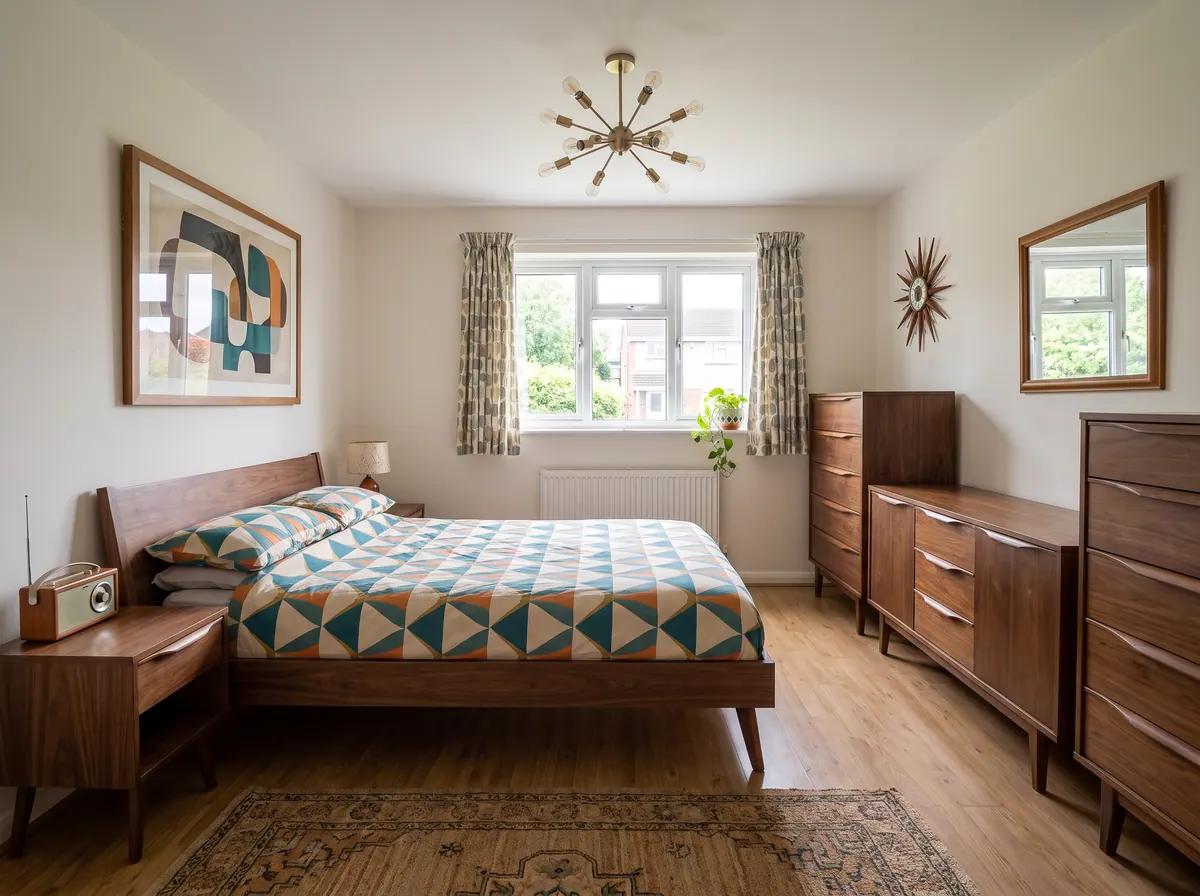
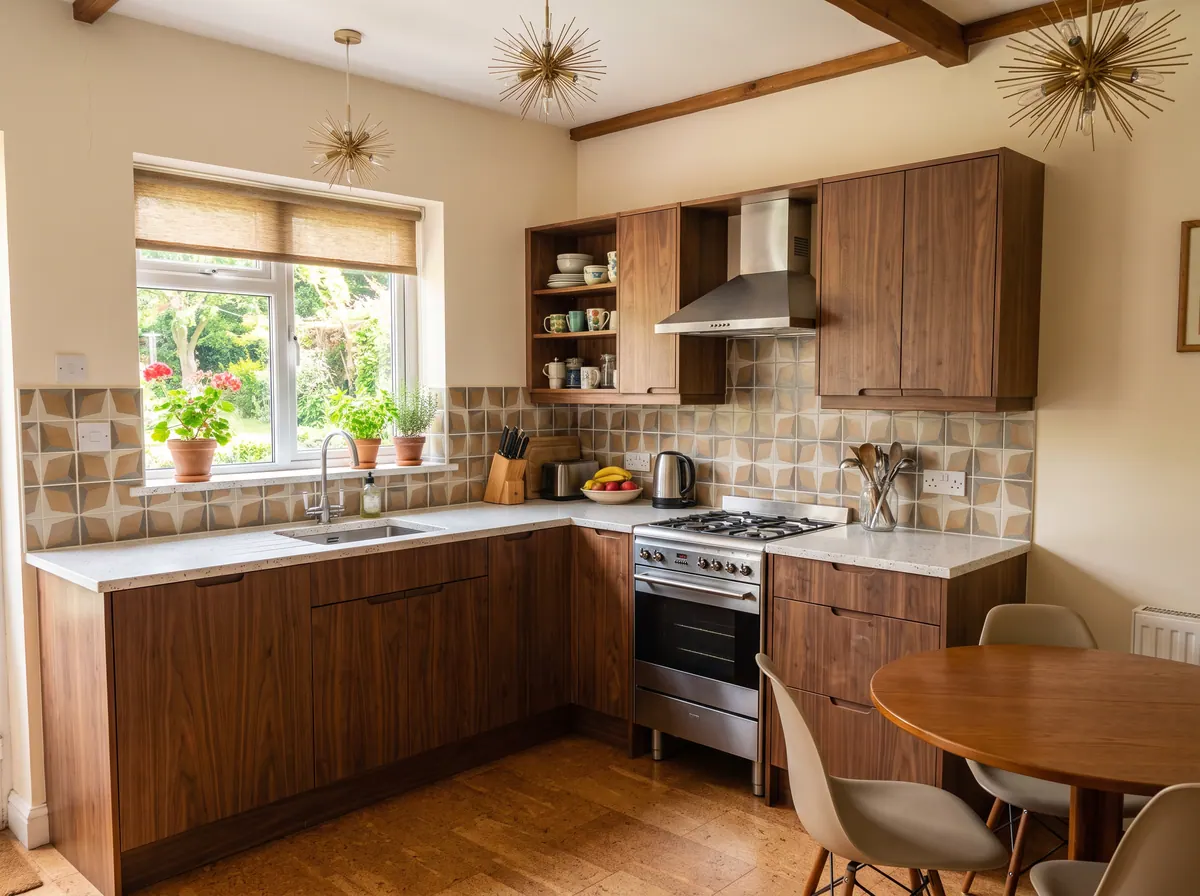
Both use wood and simple shapes, but mid-century modern is warmer and bolder, with darker woods and stronger colors. Scandinavian is paler, lighter and softer.
Japandi is calmer and lower, with neutral colors and fewer objects. Mid-century modern is more playful, with color, graphic art and statement lamps.
Read the Japandi guideRoughly 1945 to 1969, although the style began in the 1930s and is still popular today.
Warm wood tones with accents of mustard yellow, teal, burnt orange, olive green and turquoise, on a base of white or warm gray.
Yes. It pairs well with Scandinavian, industrial and Japandi. Keep the clean lines and warm wood, and let one style lead.
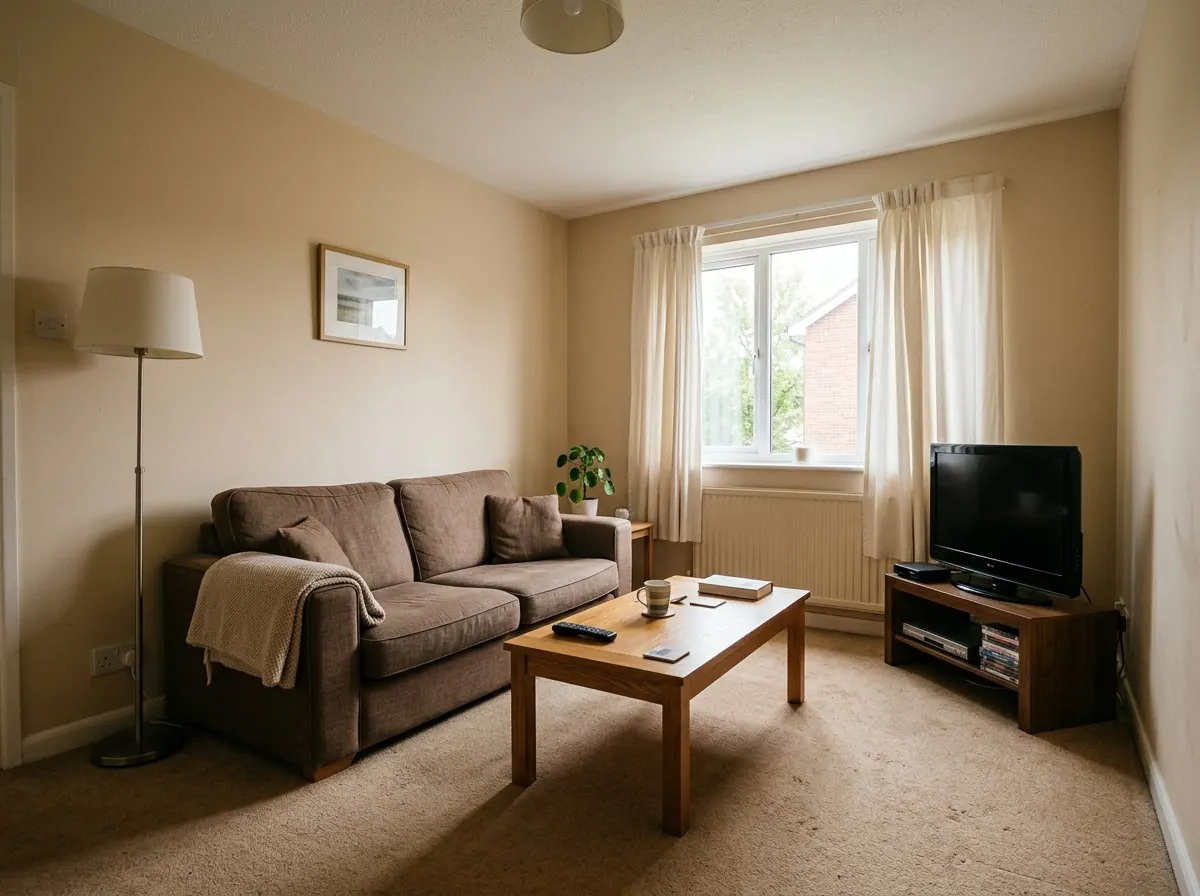
Yes. Upload a photo to the AI Interior Designer and pick Mid-Century Modern. It keeps your walls, windows and layout and redesigns the furniture and colors.
Upload a photo and get your first design free. No credit card needed.