
Transcribe a file or link
1
Choose a source
Click AI Speech to Text in the sidebar, then New transcription.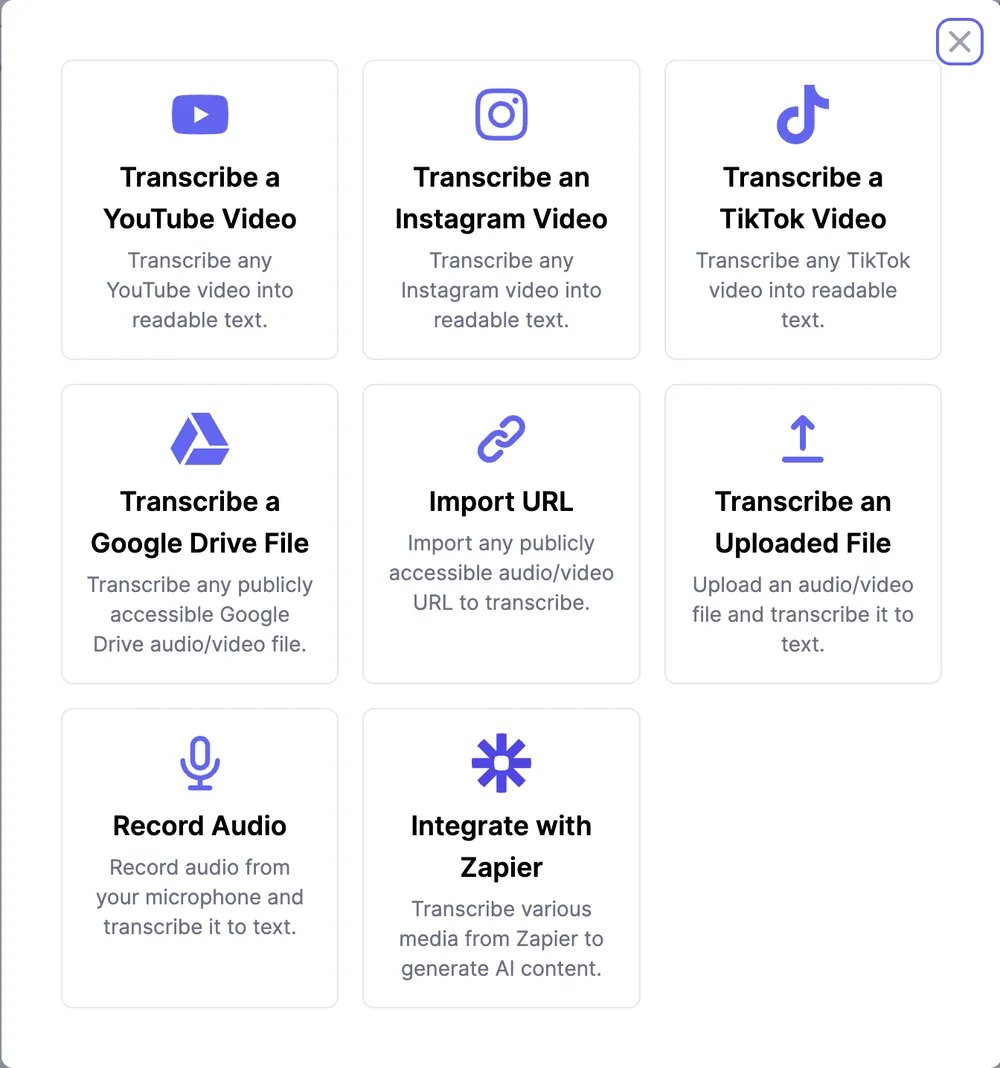
2
Check the file or link
The next page opens with your file or link filled in. Change picks another file. Audio: MP3, M4A, WAV, FLAC, OGG, AAC, Opus, WMA. Video: MP4, MOV, WebM, AVI, MKV, FLV.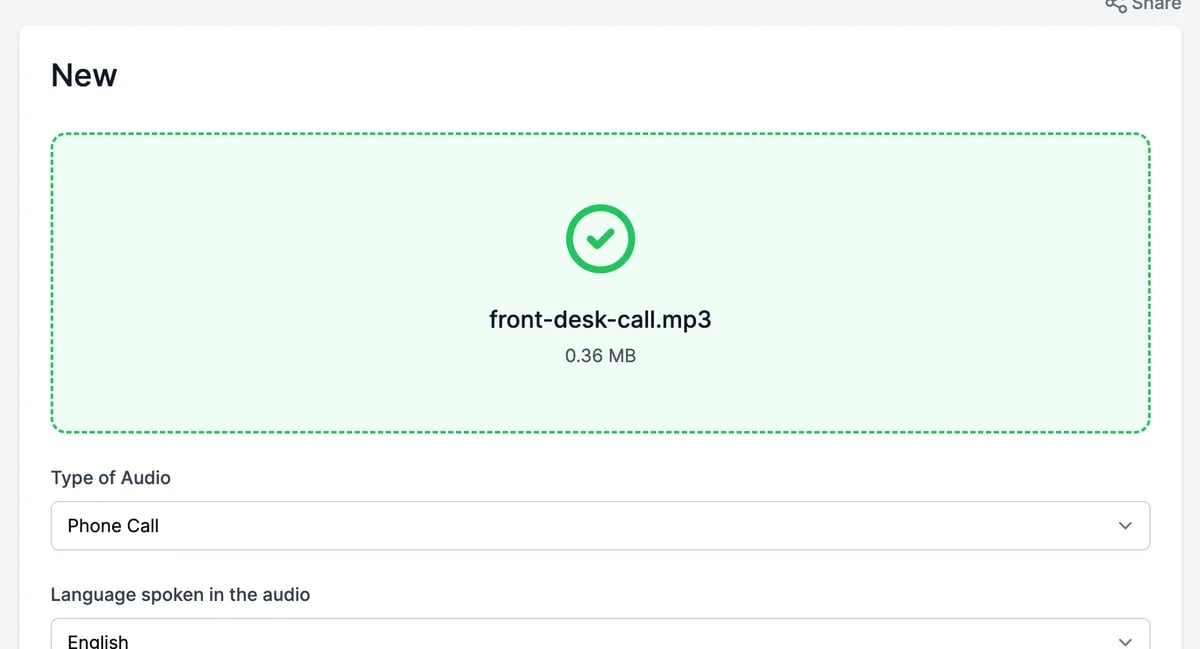
3
Set the options
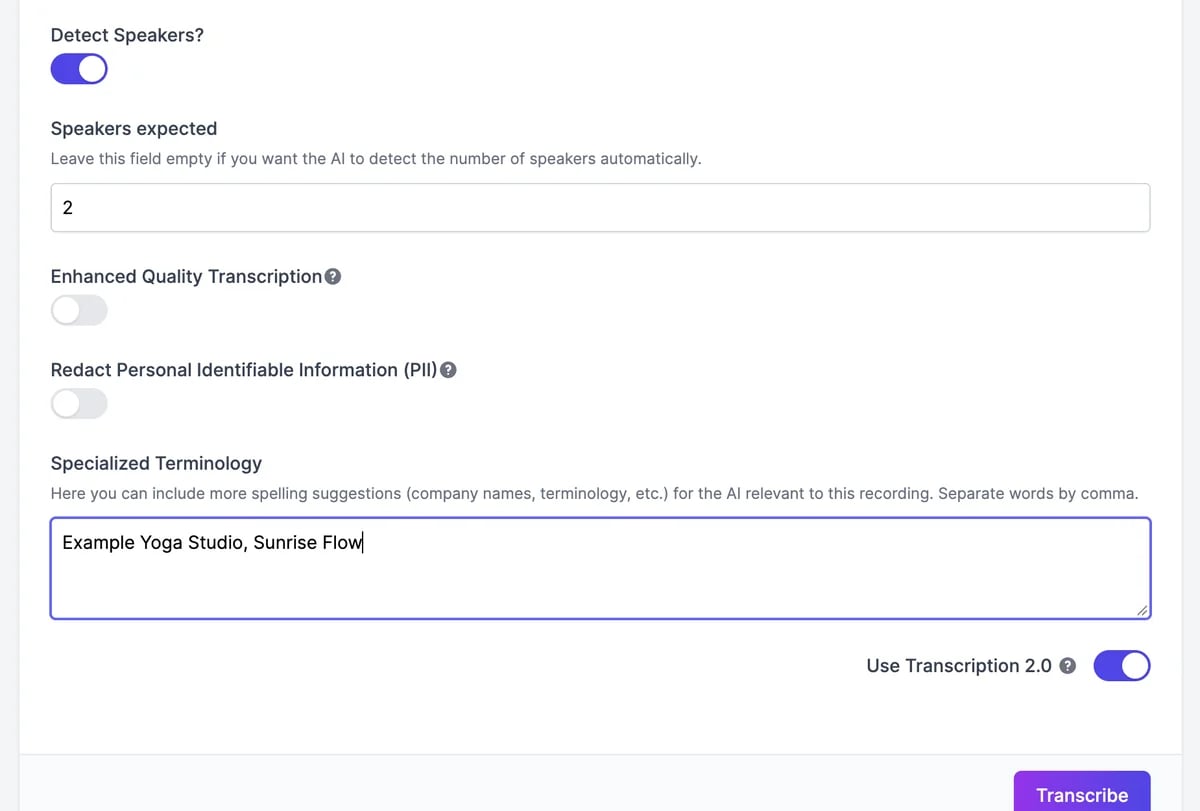
For links you choose the type, the language and Detect speakers. Enhanced Quality Transcription and Specialized Terminology only affect the older engine, so they appear under Advanced when you turn Use Transcription 2.0 off.
4
Click Transcribe
The file uploads and transcription starts. Short recordings are done in a minute or two; long ones can take 10 to 20 minutes. You can leave the page; you’ll get an email when it’s ready.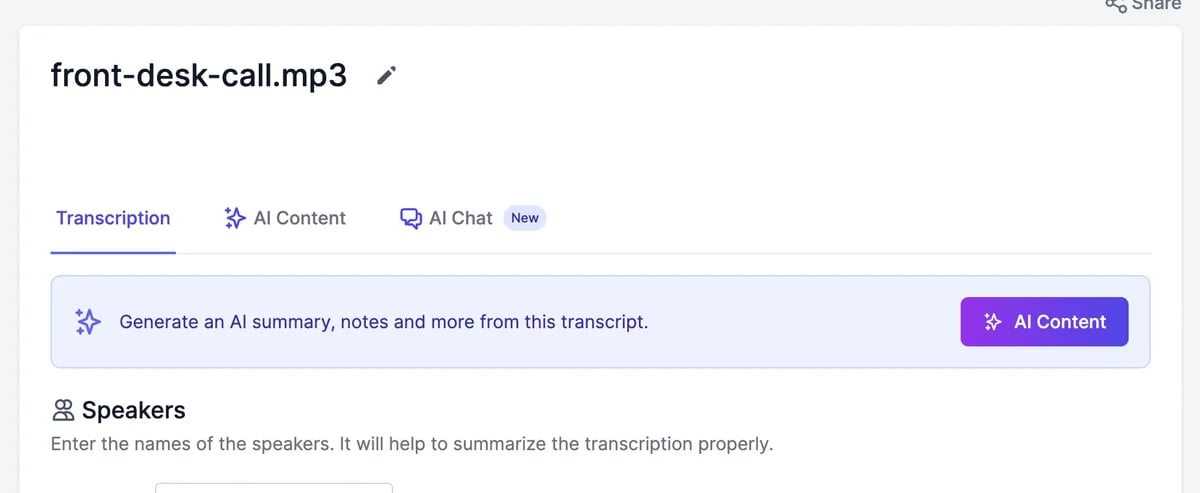
YouTube videos
With Detect speakers on (the default), the video’s audio is transcribed like a file: speakers, times you can play from, and subtitle downloads. It takes a minute or two longer than using the captions. If the audio can’t be downloaded (a live stream, a video longer than 6 hours, or a download YouTube refuses), the transcript uses the video’s captions instead and has no speakers; the page tells you when that happens. With Detect speakers off, a video with captions is ready in seconds from its captions, as plain text without speakers or subtitle downloads. When the captions mark who is talking, the transcript shows each turn on its own line. Videos without captions are always transcribed from their audio.Your transcriptions
AI Speech to Text lists your transcriptions, 20 per page, newest first. Search by name finds one. Each shows its source, type and date, and its status when it isn’t done yet: Processing, No speech, Failed, or Draft (a file or link you picked but never sent to transcribe). Click one to open it.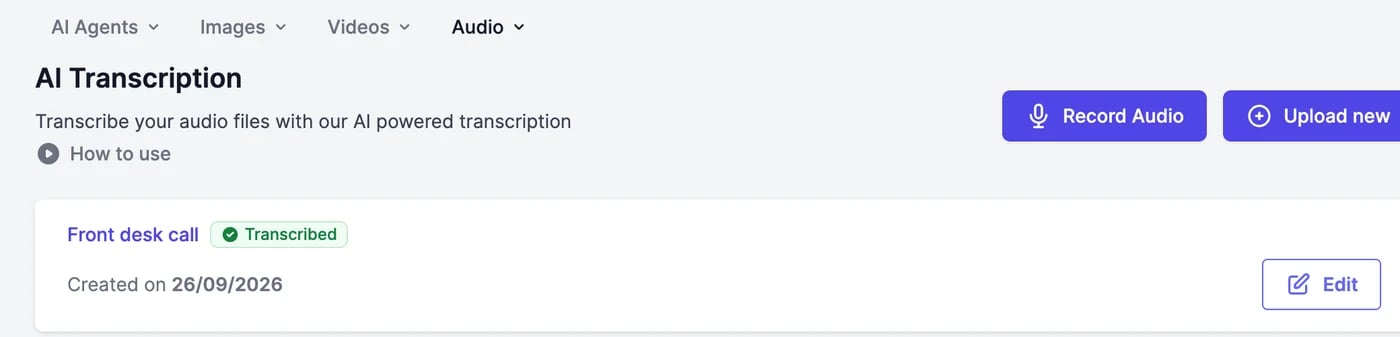
If a transcription fails
- Failed items are retried automatically. You can also open one and click Retry transcription; your file is kept.
- No speech means no speech was found, for example a recording with the microphone muted. Check the recording and upload it again.
Dictate into a text box
The microphone button in Marky, the tools, and AI Images types what you say into the text box. Dictation doesn’t use transcriptions.What it costs
Each new item uses one transcription from your plan, whatever its length. An item counts when you pick a source or start a recording, even if you don’t finish it or delete it later. Retries don’t count again. Check your usage on Settings > Usage and see Audio plans and limits. AI Content and AI Chat use words.For developers
Transcribe from your own code withPOST /api/transcriptions, which needs a paid plan. See Create transcription.
Work with a transcript
Speakers, subtitles, AI Content, and AI Chat.
Record & Transcribe
Record a meeting in your browser.