
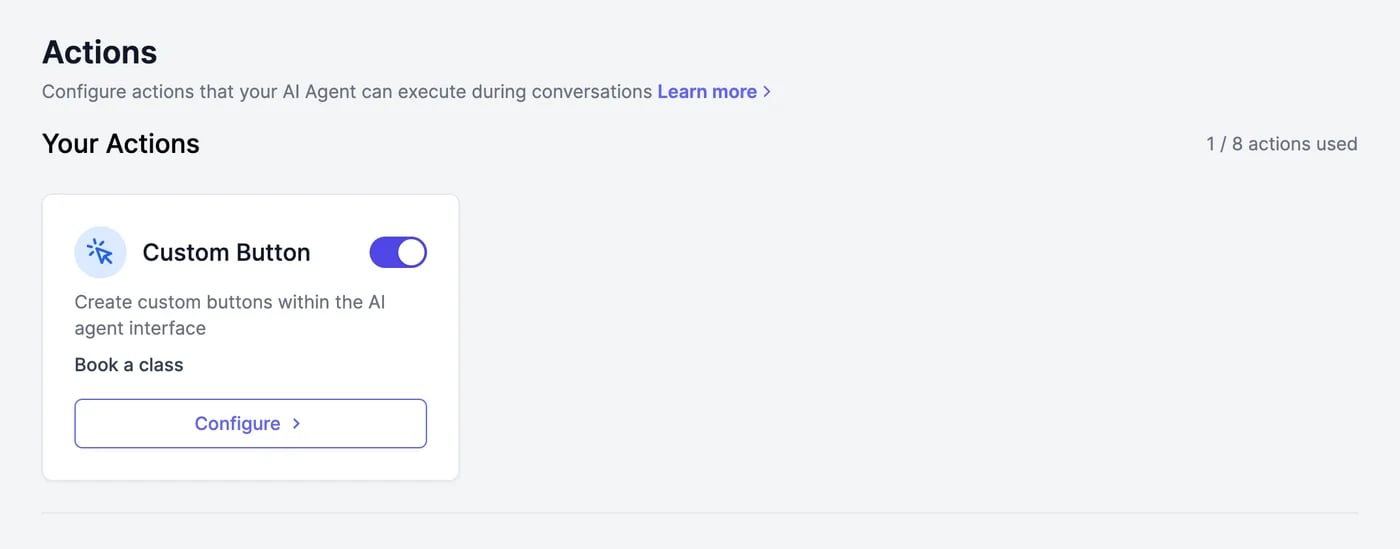
Actions are for paid plans. Each plan allows a number of actions per agent, shown at the top right of the page as used / allowed. On the Free plan, the page offers a 7-day trial. See Limits and usage.
Add an action
1
Pick an action
Open your agent, click Actions, and click an action under Add an action.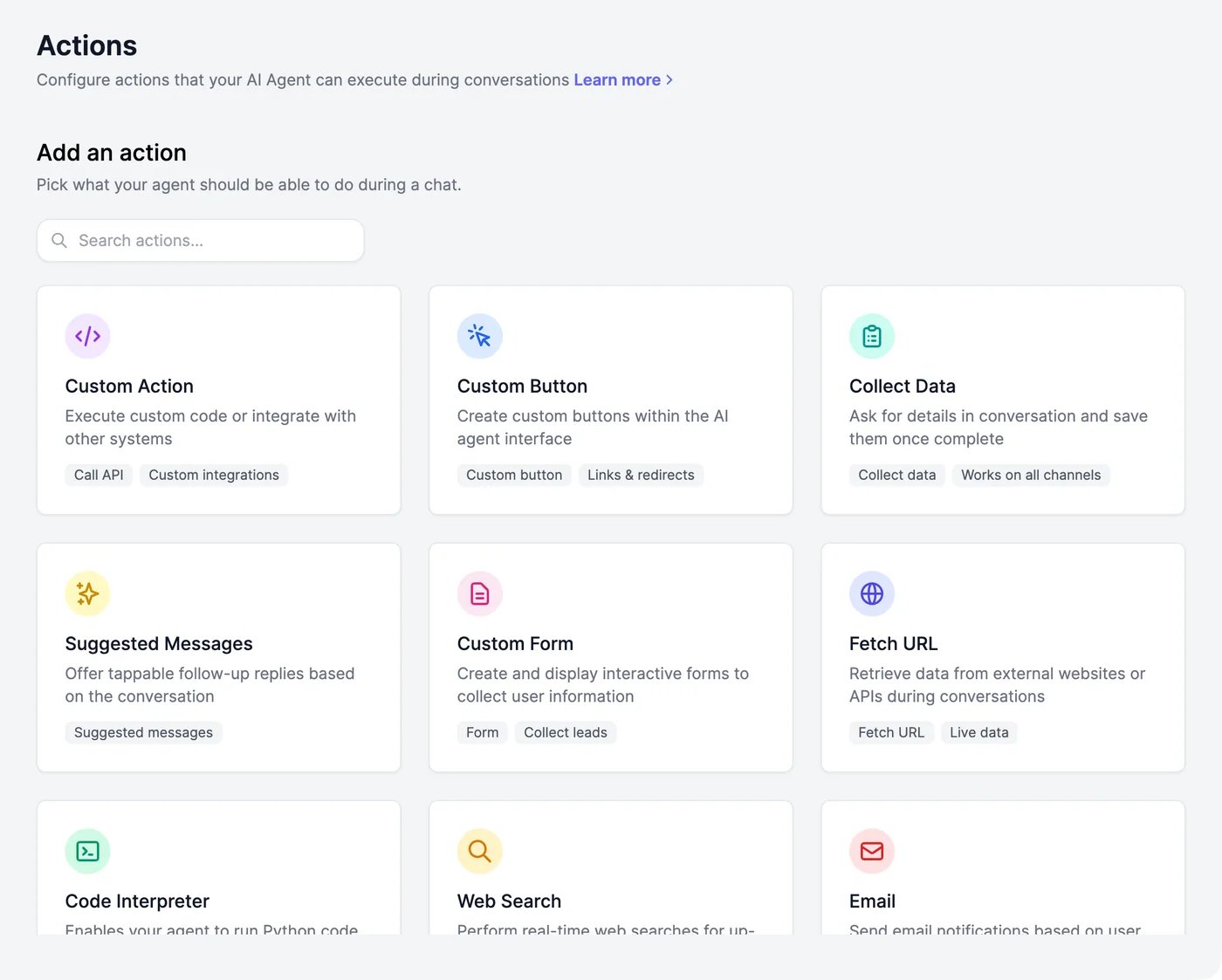
2
Name it and say when to use it
Enter an Action Name and the Trigger Instructions: when the agent should use this action. Be specific, for example “When the user wants to book a class, sign up, or try their free first class”. Click Save.
3
Configure it
Fill in the action’s settings below, such as the button’s text and link, and click Save Configuration.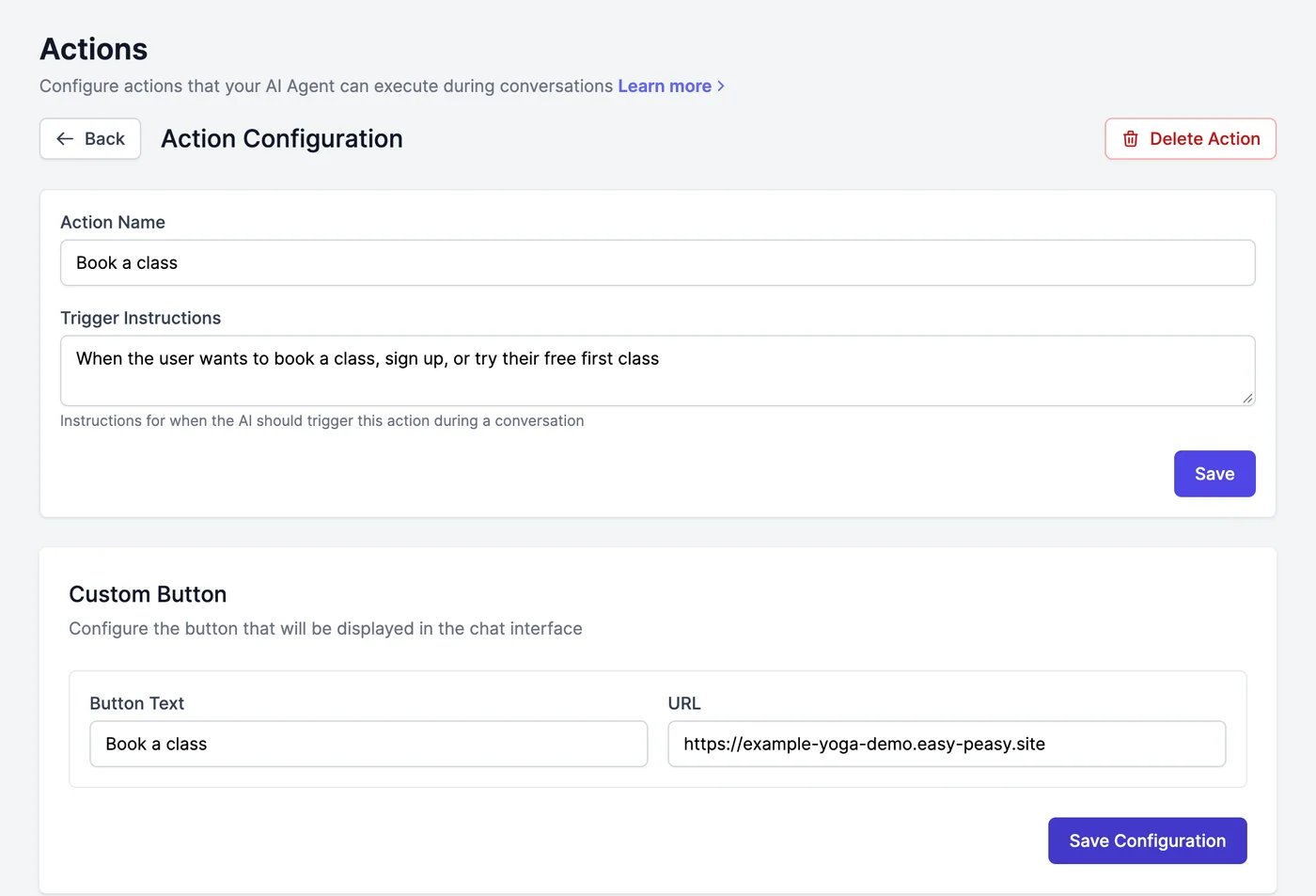
4
Test it
Ask something that should trigger it in the Playground.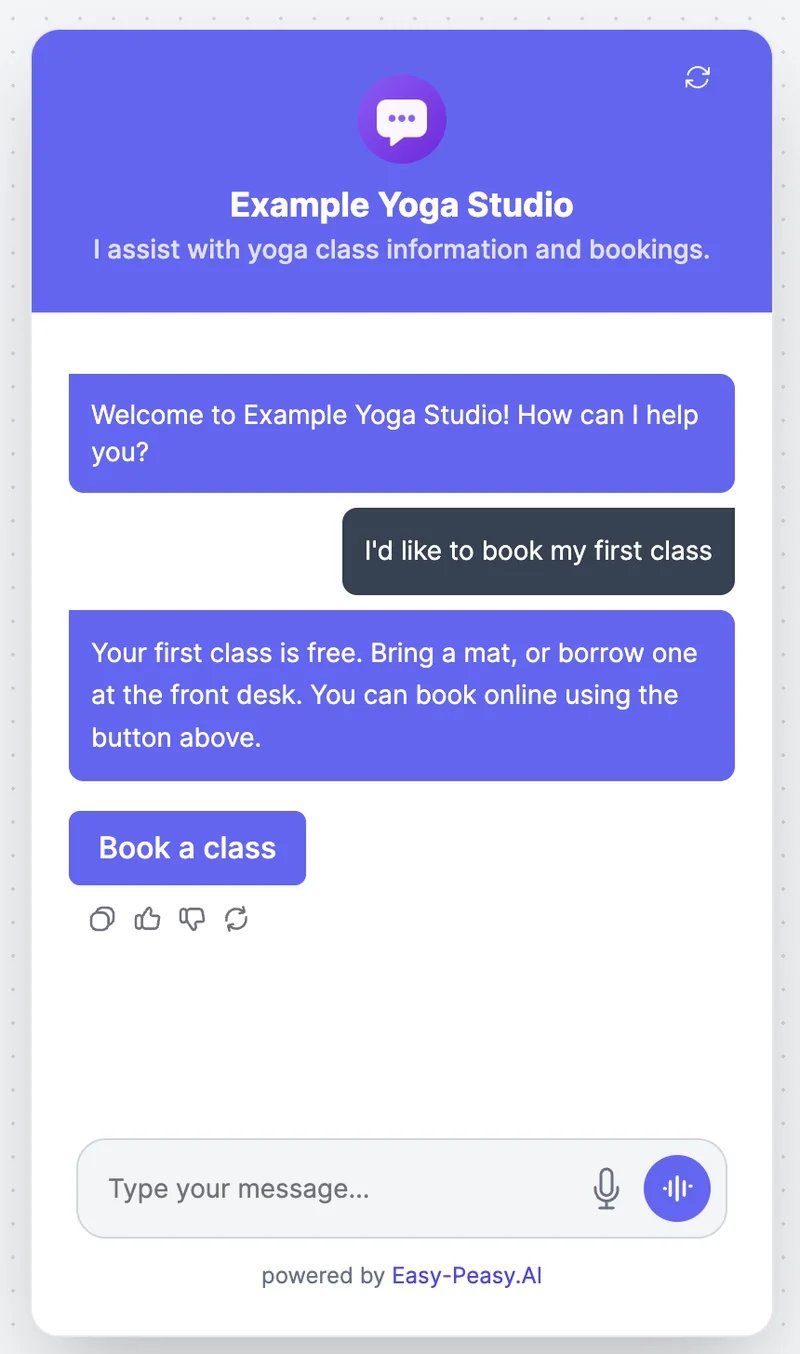
Available actions
Collect Data or a lead form?
Both capture visitors’ details. Collect Data asks naturally in the conversation, works on messaging channels too, and can send what it collects to email or a webhook. The lead form is a fixed form in the website chat that appears after the first answer. Turn on Also save to Leads to see Collect Data submissions on the same Leads page.Email templates
In the Email action’s templates,{{user}} is replaced with the visitor’s name and {{message}} with the message the agent writes. For example: subject New message from {{user}}, message Message from {{user}}: {{message}}.
Custom Action
A Custom Action sends a request to your API and gives the agent the response.- To pass values from the conversation, put
${name}placeholders in the Endpoint URL, for examplehttps://api.example.com/orders/${order_id}. The agent fills them in, asking the visitor if it needs to. - For POST and PUT, the agent writes the JSON body itself. Describe the body you expect in the Trigger Instructions, for example “Send
{"email": "...", "question": "..."}”. The Payload Template is sent as written when the agent doesn’t supply a body; placeholders in it aren’t filled in. - Add authentication, such as an API key, under Headers. The agent never sees your headers.
How the agent decides
Each action you turn on becomes something the agent can use, with your Trigger Instructions as its description. The agent picks an action when the conversation matches them, and can use several in one reply. Clear, specific trigger instructions work best. You can also mention actions in the agent’s instructions, for example “Always show the Book a class button after explaining prices.” Actions work in the website chat and on messaging channels such as WhatsApp and Telegram. Buttons, forms, and suggested messages are made for the website chat. Actions don’t run through the REST API.Leads
Collect and export visitors’ details.
Integrations
Google Calendar, Zapier, and the REST API.